- Charts of the Day
- Posts
- After the party comes the hangover.
After the party comes the hangover.
Gold and silver come crashing down.

1. Silver plunges 33%.
Investors betting on reflation don’t seem thrilled by Kevin Warsh’s Fed nomination. Gold, Silver and Bitcoin – assets that benefit from abundant Fed liquidity – are crashing.
8 trillion (!) dollars have been wiped out in gold and silver.

2. Parabolic moves.
Last week was a perfect example of casino trading, as investors dumped some parts that have seen massive flows recently.
Some moves have been amplified by gaps in market liquidity: it’s one thing to reduce exposure in US large caps or Treasuries, but a different challenge entirely to move such large volumes of cash into small caps or metals, where trading is much thinner.
The silver crash offers a compelling case study: trading volume for one of the main exchange-traded funds in the metal exploded from just $2 billion to almost $40 billion, nearly matching turnover in the main S&P 500 ETF.
The risk is now profit taking spilling over into a larger risk management exercise of forced selling into skinny exits.

3. Uranium does not seem to be affected and jumps to highest price since May 2024.

4. The Magnificent 7 are turning from “asset light” to “asset heavy”.
Meta is building “Personal Superintelligence” and it’s paying big bucks in capex, $115 B-$135B to build out its AI engine.
Its free cashflow will vanish.

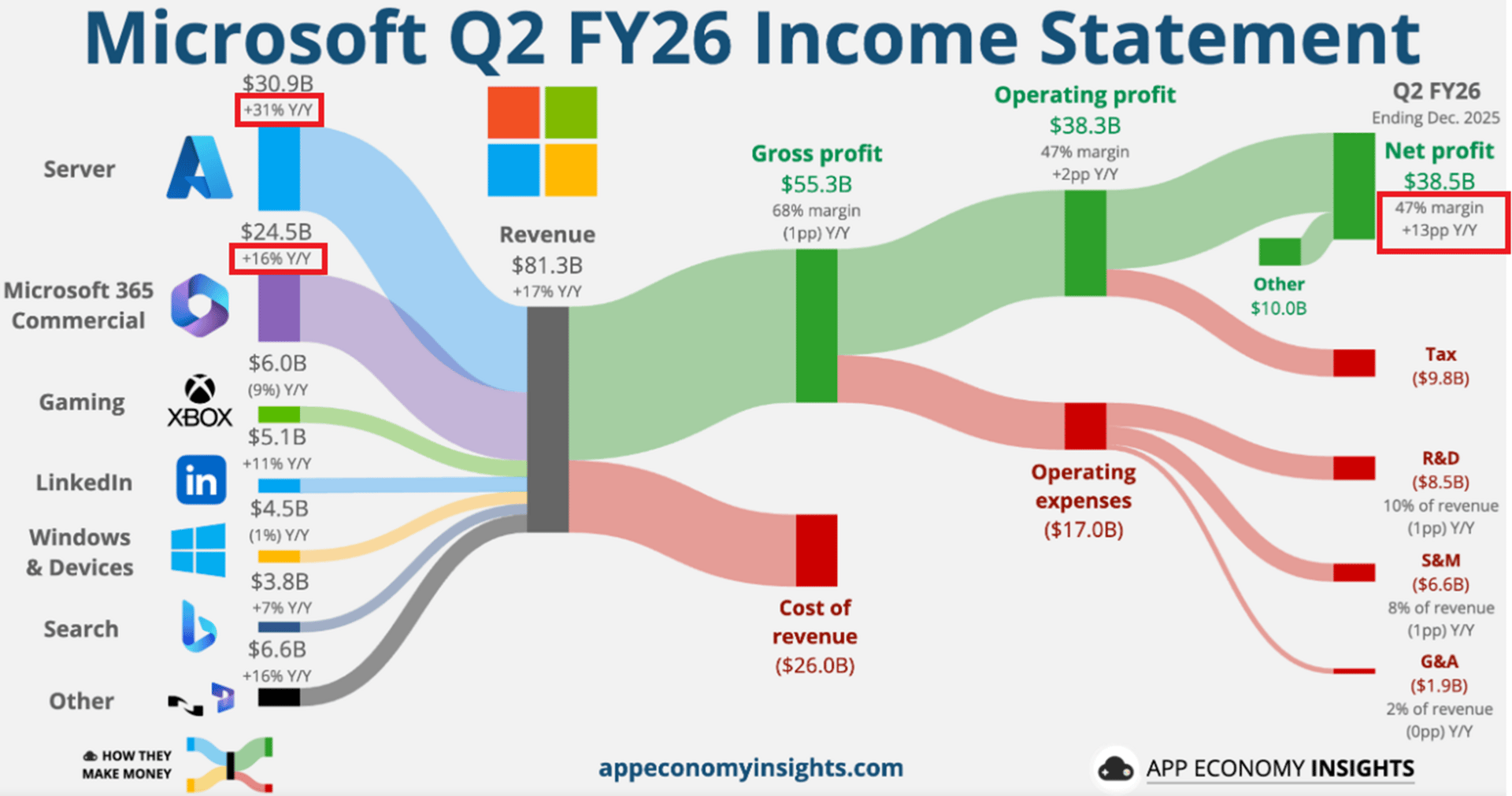
5. Microsoft is no longer just a cloud service, but the central “operating system” for the agentic era.
• Platform: Microsoft Foundry now hosts over 11,000 models, including direct competitors like Anthropic’s Claude 4.5 and Mistral. Microsoft is positioning itself to win regardless of which model dominates the LLM wars.
• Consolidation of the stack: It unifies previously fragmented tools (Azure AI Studio, the SDKs, and the Agent Service) into a single Agent Factory. This reduces friction for enterprises moving from chatbots to autonomous agents.
• Beyond the cloud: The new Foundry Local capability allows models to run on local Neural Processing Units (NPUs), extending Microsoft’s reach from the massive Iowa data centers directly onto the user’s laptop.
By becoming the Foundry for the world’s AI, Microsoft is attempting to replicate the TSMC model for software: providing the indispensable infrastructure that rivals and partners alike must use to build their future.
Not a subscriber yet?
How was today's Edition?What can we improve? We would love to have your feedback! |
Reply