- Charts of the Day
- Posts
- Temporary profit taking as Iran discussions continue.
Temporary profit taking as Iran discussions continue.
Hormuz is still blocked and a deal could take weeks.
1. The “roaring twenties” are back.
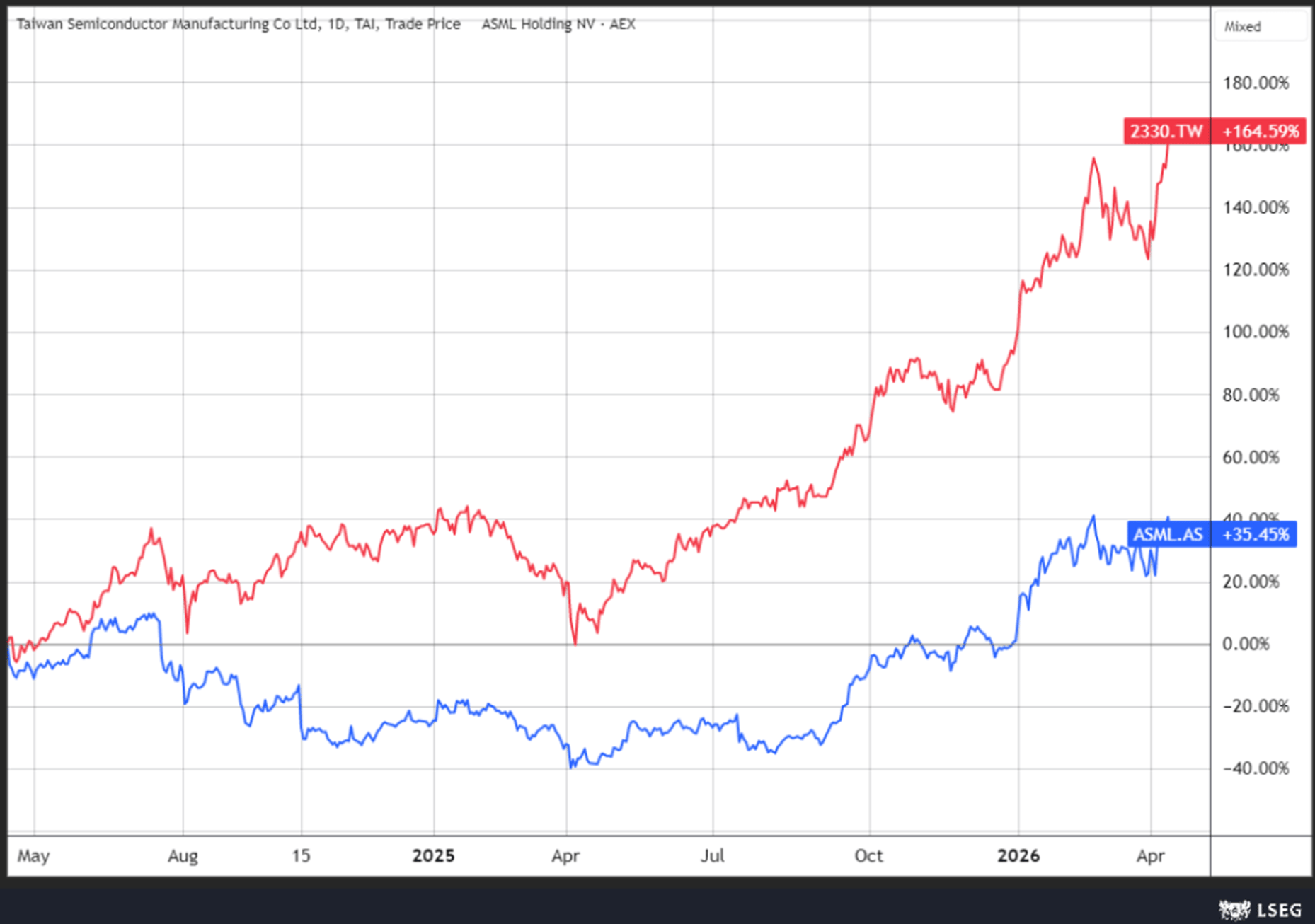
The AI narrative is back in focus after TSMC raised its outlook for 2026, forecasting revenue growth of more than 30% and saying that capex is likely to lean toward the upper end of its forecast ($56 billion).
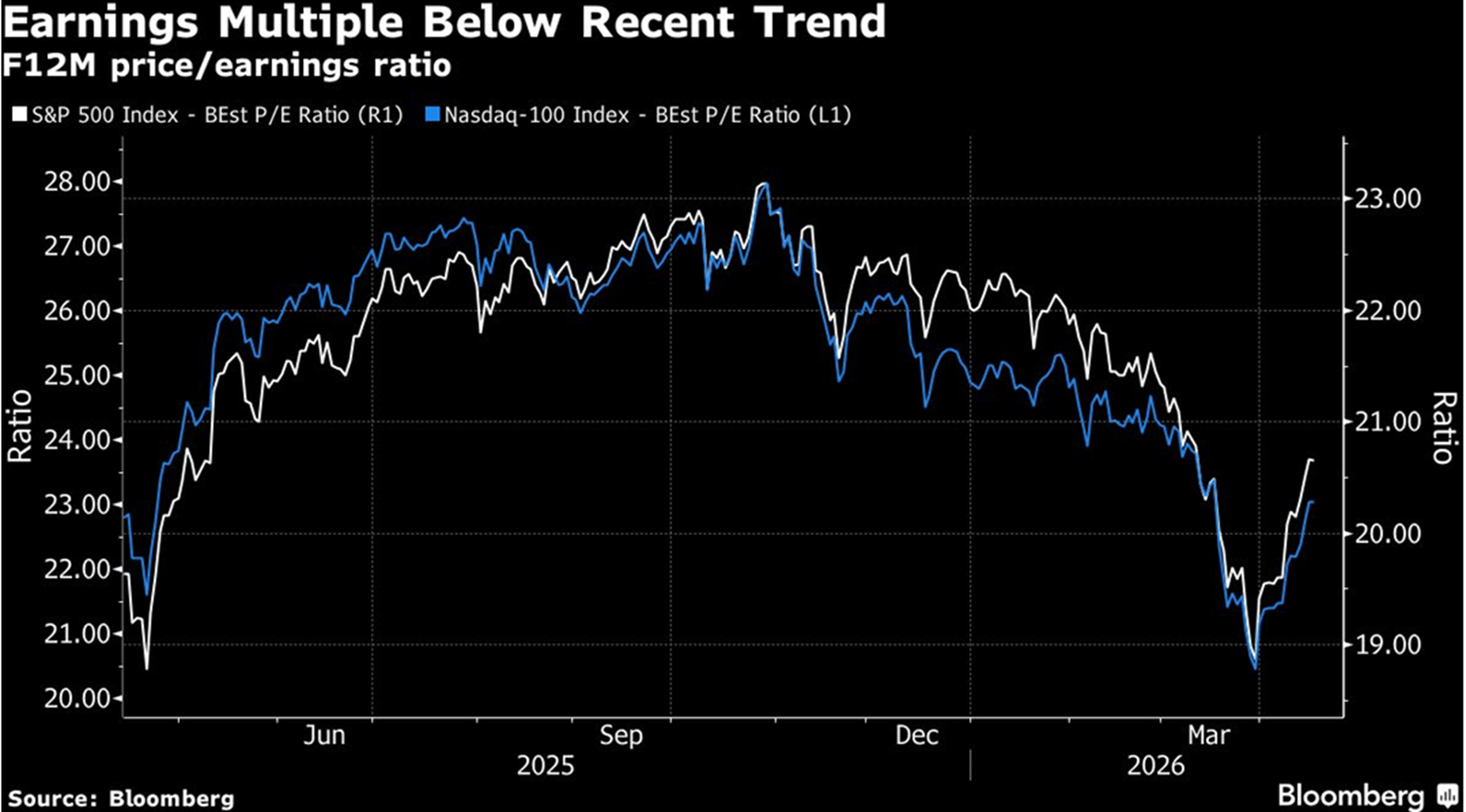
And while the S&P 500 hit a new record, valuation ratios are still well below the levels seen in late 2025, indicating that earnings forecasts are moving up faster than stock prices. The current 12-month forward blended PE multiple for the S&P 500 of about 21 times compares to a peak of 23 times in November.
2. FOMO is back as well.
Nasdaq hits “overbought” level.

3. TSMC forecasts sales to grow by more than 30%.
The company noted the next 3 years capex will be significantly higher than the past 3 years.
TSMC is quite confident on strong growth in 2026 and expects the supply tightness to persist into at least 2027, due to strong demand and lead-times for capacity build. Amidst the rising discussion on competitive pressures, TSMC also exuded confidence in keeping its market share and highlighted that there are no shortcuts to building a foundry business.
This is obviously supportive of the growth story at ASML, especially for EUV shipment estimates.
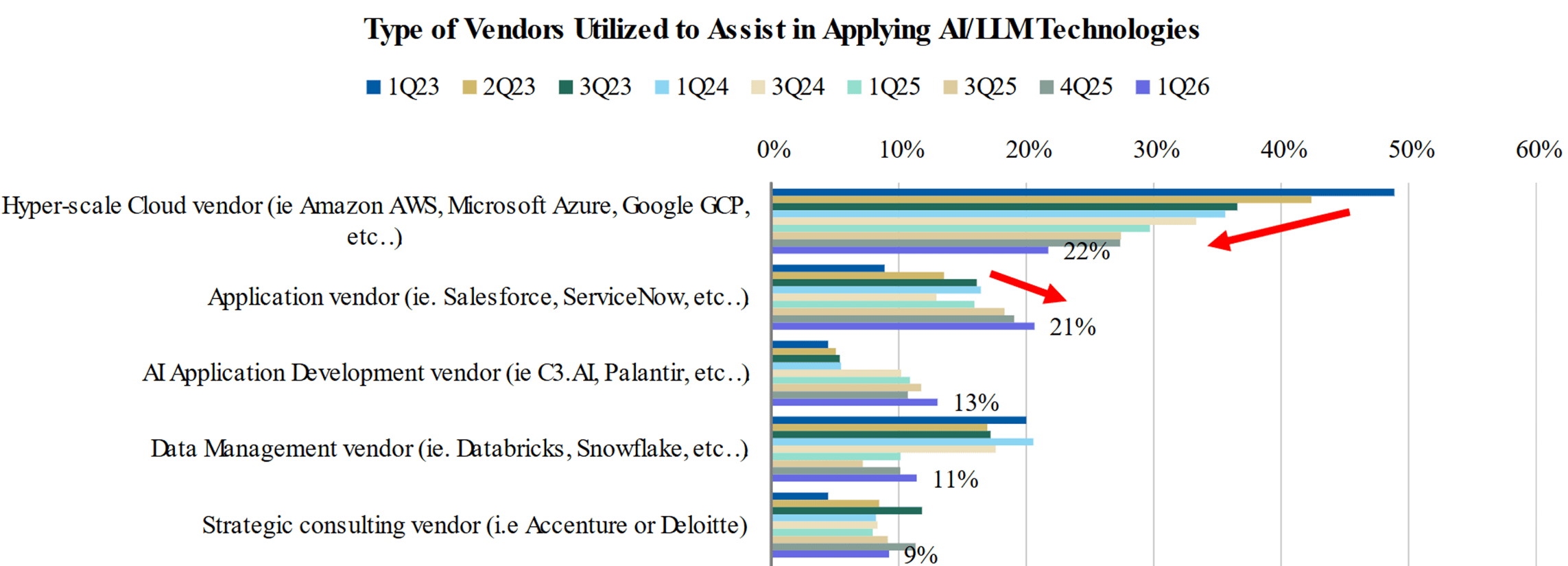
4. Application vendors like Salesforce and ServiceNow are gaining incremental share of “GenAI” spend.
Core systems of record (ERP, HCM, CRM, etc.) have a key place in an AI world, being highly defensible given their proprietary data, deep domain expertise, and high workflow complexity.
“While organizations have initially preferred to use LLMs and hyper-scale cloud vendors to deploy AI, we increasingly see this shifting more in favor of application vendors as these vendors better build out their AI solutions, a consistent progressive trend we have seen in our CIO survey.” Says JPMorgan.
5. The Hormuz pipeline plan B.
Unless Tehran sets toll charges at a low level, there's a major financial incentive for Gulf states to start building alternative pipeline routes.
Gabriel Collins, of Rice University’s Baker Institute for Public Policy, has found a holistic workaround. He envisages twin pipelines with 56-inch diameters, each carrying 5 million barrels of daily supply, stretching 1,800 kilometres from southern Iraq through Kuwait and then along the coast to pick up oil from Saudi and the UAE. Terminating in two Omani ports, Duqm and Salalah, it would avoid both the Red Sea and Gulf chokepoints, meaning crude could flow freely east into the Indian Ocean to Gulf states’ main Asian customers. But it would take up to seven years to build — and cost about 50 billion.
Below: Plan B pipeline in blue.

Not a subscriber yet?
How was today's Edition?What can we improve? We would love to have your feedback! |
Reply